
How Therapy in Nature Helps Reduce Anxiety

Anxiety has become an increasingly common mental health challenge in today’s fast-paced indoor-based world. While traditional therapies such as counseling and medication remain essential tools, growing research shows that spending time in nature can significantly reduce stress and anxiety.

At Evolve in Nature, many clients seeking anxiety therapy in Boulder are drawn to approaches that integrate outdoor environments with evidence-based mental health care. From walking through Boulder’s beautiful trails to practicing mindfulness beside a creek, nature can create powerful conditions for emotional regulation, reflection, and mental clarity.

Nature therapy offers a simple but profound reminder: the human nervous system evolved in natural environments, and reconnecting with those environments can help restore balance when stress and anxiety feel overwhelming, especially during big challenges. 

In her article Courting Your Darkness: An Antidote to Disenchantment, Megan Newton explores how true emotional wholeness often comes from courageously turning toward the parts of ourselves we tend to avoid—our pain, shadow, and “darkness.” These big realizations can often be easier to come to in the natural world.  

Understanding Nature Therapy for Anxiety

Nature therapy, which can be referred to as ecotherapy,  involves intentional time spent in natural environments as a way to support emotional and psychological well-being. This may include structured therapeutic sessions outdoors or simply integrating more time in nature as part of a broader mental health routine.

The underlying principle is that humans have an innate relationship with the natural world. When we step outside constant stimulation, noise, and digital overload, the body and mind often begin to regulate themselves more naturally.

Studies show that individuals who engage in nature-based practices frequently report:

  • Reduced anxiety symptoms

  • Improved mood and emotional resilience

  • Greater mental clarity

  • Lower perceived stress

For many people, nature provides a grounding environment where it becomes easier to slow down, breathe, and reconnect with the present moment.
Does Nature Therapy Actually Reduce Anxiety?

A growing body of research supports the mental health benefits of spending time in natural environments.

One widely cited study from Stanford University found that individuals who walked in natural environments showed reduced activity in the brain regions associated with rumination, the repetitive negative thinking often linked to anxiety and depression.

Nature also affects the body in measurable ways. Exposure to sunlight helps regulate vitamin D levels, which are connected to mood stability, while fresh air and gentle movement support circulation and oxygen flow to the brain.

Time in nature can also activate the parasympathetic nervous system, which is responsible for relaxation and recovery. When this system is activated, heart rate slows, breathing deepens, and the body shifts away from the chronic stress response that fuels anxiety.

For individuals seeking professional support, programs such as anxiety therapy in Boulder may incorporate outdoor environments as part of a broader therapeutic approach.

How Nature Influences the Brain and Body

Being outdoors engages multiple sensory pathways – sight, sound, smell, and touch – which bring attention back to the present moment. This sensory grounding can interrupt cycles of overthinking and calm the nervous system.

Research has shown that time spent in natural environments can lead to:

Benefit of Nature Therapy Evidence & Outcome
Reduced cortisol levels Forest walks have been shown to lower stress hormone levels
Decreased rumination Natural environments reduce repetitive anxious thinking
Enhanced parasympathetic activity Supports relaxation and nervous system recovery
Improved mood and vitality Participants report higher overall well-being
Better sleep quality Nature exposure supports healthy circadian rhythms

Over time, these effects may also support neuroplasticity, the brain’s ability to form new neural pathways and develop healthier coping mechanisms.

What Nature Therapy Feels Like

Many people find that therapy outdoors feels different from traditional office sessions.

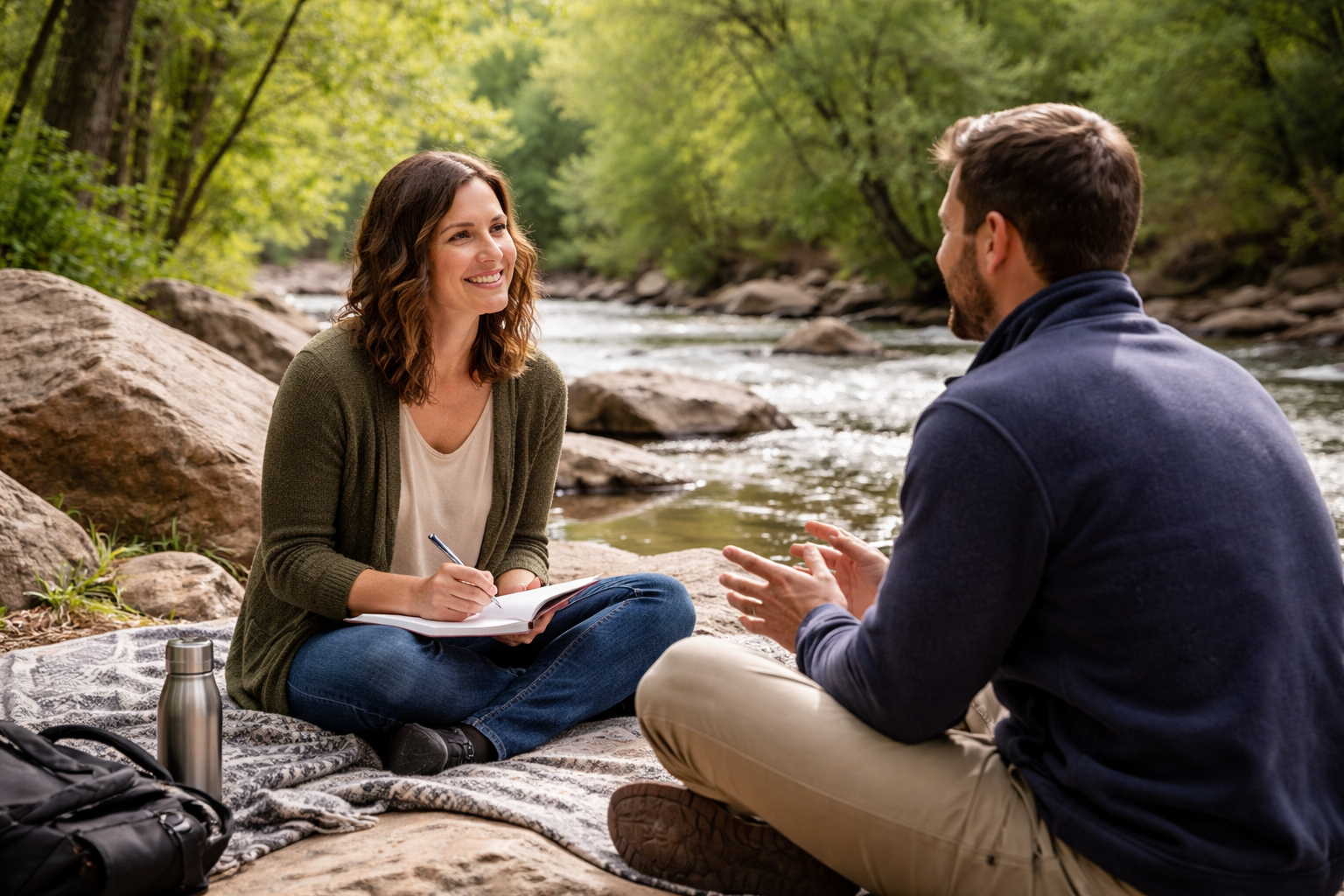
Walking along a quiet trail, sitting near water, or simply noticing the movement of wind through trees can create a sense of openness that allows conversations to unfold more naturally. The natural environment often slows the pace of thinking, making it easier to process difficult emotions.

For some individuals, being outdoors also reduces the pressure that can sometimes arise in more formal clinical settings. Nature provides a setting that feels less confined and more reflective, allowing space for insight, movement, and moments of quiet awareness.

Ecotherapy Practices That May Help Reduce Anxiety

Nature therapy doesn’t require dramatic outdoor adventures. Many simple activities can activate the calming effects of nature.

Examples include:

  • Walking or hiking in local parks or natural areas

  • Gardening or spending time with plants

  • Sitting quietly outdoors and observing the environment

  • Practicing mindfulness or breathing exercises outside

  • Journaling or reflecting in nature

One well-known ecotherapy practice is forest bathing, a concept originating in Japan that involves immersing oneself in the atmosphere of a forest environment. The goal is not exercise or productivity, but simply experiencing nature through the senses.

At Evolve in Nature, this spirit of mindful presence often becomes part of the therapeutic process.

Experience the Benefits of Nature Today!

You don’t need a wilderness retreat to begin experiencing the calming effects of nature. Even small, consistent moments outdoors can help regulate the nervous system.

Some simple ways to start include:

  • Taking a 10–15 minute walk during the morning or evening

  • Sitting outside for a few minutes of mindful breathing

  • Spending time near water, trees, or open green spaces

  • Taking short outdoor breaks during the workday

  • Journaling or reflecting outdoors instead of indoors

Over time, these small practices can create meaningful shifts in mood and overall well-being.

Combining Nature Therapy with Professional Support

While time in nature offers meaningful benefits, some individuals may benefit from combining these practices with professional mental health support.

Therapy provides a structured environment to explore the underlying causes of anxiety, develop coping strategies, and build long-term emotional resilience. In some cases, additional care such as psychiatric medication management may also be helpful.

When integrated thoughtfully, these approaches can create a more holistic path toward mental health and well-being.

Common Misconceptions About Ecotherapy

There are several misunderstandings about nature-based therapy.

“It’s only for outdoor enthusiasts.”
Nature therapy can be accessible to nearly anyone. Even brief exposure to natural environments can have calming effects.

“It replaces traditional therapy.”
Nature therapy works best as a complement to professional mental health care, not a replacement.

“Short time outdoors doesn’t matter.”
Research suggests that even short periods of time in nature can reduce stress markers in the body and improve emotional regulation.

Nature-Based Counseling in Boulder
For individuals seeking professional support, working with a therapist who integrates outdoor environments into the therapeutic process can offer a unique path toward healing.

Boulder’s natural landscapes provide an ideal setting for nature-based counseling approaches that combine traditional psychotherapy with the restorative benefits of the outdoors.

At Evolve in Nature, therapy may include opportunities to engage with natural environments while exploring anxiety, emotional patterns, and personal growth in a grounded and supportive setting.

Conclusion

Nature therapy for anxiety is a research-supported approach to calming the nervous system, improving mood, and restoring emotional balance.

At Evolve in Nature, healing often happens not only through conversation but through connection, with ourselves, with others, and with the natural world.

If you’re interested in learning more about nature-based programs or anxiety therapy in Boulder, our team is here to help guide you.

FAQ

  • Nature therapy involves spending time in natural environments to support emotional well-being, reduce anxiety, and promote nervous system regulation.


  • Ecotherapy can reduce cortisol levels, lower blood pressure, decrease rumination, and activate the parasympathetic nervous system, which supports relaxation.


  • Yes. Even brief exposure to natural environments, such as a short walk or sitting in a park can reduce stress and improve mood.


  • Yes. Some therapy practices incorporate outdoor environments into counseling sessions to support emotional processing and mindfulness.


  • Regular exposure to nature has been linked to improved mood, better sleep, lower stress levels, and stronger emotional resilience.


 

Understanding the Dual Process Model of Grief

Understanding the Dual Process Model of Grief

Grief is often described as a journey, but for many people it does not feel like a clear path with defined stages. Some days may be filled with sadness, longing, and memories of the person we have lost, while other days involve focusing on work, family, and everyday responsibilities. This emotional back-and-forth can feel confusing, but it is actually a very sacred part of the grieving process. The Dual Process Model of Grief, developed by grief researchers Margaret Stroebe and Henk Schut, provides a framework that…

Sunlight and Mental Health: Why a Little Sunshine Can Make a Big Difference In Your Mood

Sunlight and Mental Health: Why a Little Sunshine Can Make a Big Difference In Your Mood

In a place like Boulder, Colorado, the value of sunlight can be something we take for granted. It quietly fills our days, marks the passage of seasons, and warms our skin even on the coldest winter days, yet its impact on our mental health runs far deeper than many realize. Beyond simply “brightening your day,” sunlight plays a powerful biological and emotional role in how we feel, think, sleep, and connect with others…

How Trauma Shows Up in the Body: Signs You Shouldn’t Ignore

How Trauma Shows Up in the Body: Signs You Shouldn’t Ignore

Trauma is often thought of as something that lives in memory of flashbacks, intrusive thoughts, or painful emotions. But for many people, trauma shows up first and most persistently in the body. Chronic pain, fatigue, anxiety, digestive problems, or emotional numbness may all be signs of trauma in the body, even when the original experience feels distant or unclear. 

You’re Not 7 Anymore: Why Your Nervous System Still Thinks You Are (and How to Gently Rewire It)

You’re Not 7 Anymore: Why Your Nervous System Still Thinks You Are (and How to Gently Rewire It)

In my office, I often have the privilege of sitting with a very specific kind of person. Someone whose heart is as big as their to-do list, and who I’ve come to care for deeply. On the outside, they look competent and thoughtful. They are the reliable one, the friend people call in a crisis, and the coworker who quietly holds everything together. On the inside, this person feels as though they are constantly on

Courting Your Darkness: An Antidote to Disenchantment

Courting Your Darkness: An Antidote to Disenchantment

Throughout narratives, myths, and stories across cultures and across time and space, a common maxim is expressed: what you exile to the dark will return to haunt you. For 300,000 years, we humans have observed what happens in a person’s life when we turn away from pain or discomfort, and we have resoundingly concluded that banishment is unsuccessful.

We’ve witnessed and noticed that what is left untended grows and transforms, sometimes into a monstrous force or detestable creature, choking and suffocating life from its hidden lair. Collectively, we’ve also deduced that the only way not to succumb to emotional, physical, or psychological death by that which one has disavowed is to coax it out of the darkness. Otherwise, whether slowly or all at once, depression, anxiety, mania, dissatisfaction, and exhaustion claw away at what is good and disrupt every path.

Finding Balance: A Compassionate Guide to the Use of Medication in Mental Health Care

Finding Balance: A Compassionate Guide to the Use of Medication in Mental Health Care

For some people, patterns of unwellness persist even when they use their best coping skills, do all the self-care, and process deep trauma. That’s because some brains and bodies are simply built a bit differently. We now understand that mental health is not only shaped by our thoughts, feelings, and behaviors, but also by factors like genetics, nutrition, systemic inflammation, hormones, sleep, gut health, and chronic stress.

When these systems are out of balance, compassionate, holistic medication support can make a meaningful difference.

The Benefits of Solitude

The Benefits of Solitude

Solitude can be defined as the active choice to seek time alone. It is the time we spend with our thoughts and our body outside of the direct influence of others. While we might think about spiritual revelation and deep contemplation when we think about solitude, we don’t have to be seeking enlightenment to engage in this personal practice.

Solitude is useful for anyone who needs time and space to calm from strong negative emotions, like anxiety, stress, and anger, or from an intense emotional experience. This solo time provides space to to process your experience, find your response, reset and restore.

How Attachment Wounds Show Up in Everyday Moments

How Attachment Wounds Show Up in Everyday Moments

You sit down next to your partner at the end of a long day, hoping for some connection. Instead of turning toward you, they reach for their phone. A familiar tightness rises in your chest. You shut down, bristle, or suddenly feel invisible.

On the surface, it’s a fleeting, ordinary moment. But the emotional charge that it creates feels disproportionate and is often a sign of something much older.

This is the terrain of attachment wounds - those tender places shaped by early relational experiences that continue to influence how we show up with the people we love most. Understanding these wounds is the first step in loosening their grip on our emotions.

Piecing Together the Self with Parts Work and Collage

Piecing Together the Self with Parts Work and Collage

Do you ever notice conflicting feelings inside you, like a part of you wants something while another part holds back? Parts work is a therapeutic approach based on the idea that we are made up of many different aspects of self, each holding specific emotions, beliefs, or roles that have formed through our life experiences. These parts often show up in response to past events, and in therapy, we learn howto relate to them with curiosity rather than judgment.

Collage is an art form that offers an external reflection of these internal parts. It is a process that doesn't ask us to create something from scratch, but instead invites us to gather parts that are already in existence.

How to Effectively Treat OCD, Part III

How to Effectively Treat OCD, Part III

Many people who struggle with OCD symptoms do not know where to turn for help, and common therapeutic practices like talk therapy can sometimes cause symptoms like hyperfixation to worsen. My hope for the last part of this series is for people with OCD symptoms to find and connect with therapists who can provide quality, affirming treatment. These therapists will most often be trained in Exposure Response Prevention (ERP), mindfulness, and somatic practices, and they specialize in helping clients break free from persistent thought patterns and compulsive behaviors.

The Hidden Grief We All Carry

The Hidden Grief We All Carry

Grief is most commonly associated with tangible events such as the death of a loved one, the end of a relationship, or the loss of a job. But what about the grief that comes from the quiet, daily absences? The conversation that never happened, the celebration no one showed up for, the hug that never came? These are the invisible bruises we carry, often without realizing their weight.

Unrecognized grief slips under the radar. It isn't socially validated or publicly mourned, but it's completely real.

Rethinking Symptoms: Healing Through Advanced Therapeutic Modalities (Part II)

Rethinking Symptoms: Healing Through Advanced Therapeutic Modalities (Part II)

True emotional healing involves undoing the mechanisms that keep us stuck in the patterns of negative self belief. This process often uncovers deeply buried emotions held in the body such as sadness, anger, and/or grief. It is not simply a matter of recognizing our negative beliefs; it requires a deliberate and compassionate journey toward transformation.

These emotions become embedded in both psychological patterns and physical sensations, and requires a healing approach that addressses the whole person, mind and body.

Do I Have OCD? A Series on OCD, Part II

Do I Have OCD? A Series on OCD, Part II

Obsessive Compulsive Disorder (OCD) is substantially misdiagnosed, leading to improper treatment, worsening of symptoms, and suicidality. Many providers are not trained on the intricacies of OCD and therefore usually misdiagnose clients with another type of anxiety disorder, depression, or psychosis. Too many clients spend years feeling even more distant or disgusted by themselves because they do not know why their obsessions and compulsions won’t leave, even with consistent therapy.

It’s important for both providers and clients to understand how OCD can present itself so they can catch it in its tracks and start OCD-specific treatment like Cognitive Behavioral Therapy (CBT) and Exposure Response Prevention (ERP).

Understanding Somatic Therapy

Understanding Somatic Therapy

At its heart, somatic therapy acknowledges that our physical and emotional experiences are deeply intertwined. It emphasizes the importance of understanding the mind-body connection as a key to therapeutic healing. By paying attention to how emotions manifest in the body, from tension in the shoulders to that fluttery feeling in the gut, we can unlock pathways to profound relief and self-awareness.

Somatic therapy is a type of psychotherapy that believes your body has its own language, and one that we need to listen to. Traditional talk therapy often focuses on your thoughts and feelings, but somatic therapy asks, "What’s your body trying to say?"

Rethinking Symptoms: Identifying and Healing the Source of Emotional Wounds

Rethinking Symptoms: Identifying and Healing the Source of Emotional Wounds

Managing symptoms is an essential part of therapy, but the deeper, transformative work involves identifying and healing the wound at its source. In psychology, there is frequent discussion about the “root cause” of distress. In this article, we explore where negative beliefs about ourselves and our symptoms might originate.

Healing emotional wounds requires understanding their origins and addressing the unmet needs that shaped negative beliefs about ourselves. By meeting these wounds with compassion and using evidence-based therapeutic approaches, it’s possible to create lasting change.

What is Obsessive Compulsive Disorder? A Series on OCD, Part I

What is Obsessive Compulsive Disorder? A Series on OCD, Part I

OCD is not just the need to be tidy or clean, worrying about germs or needing to do something the same amount of times, every time. For many people with OCD, their bodies and brains feel like a war zone. Like they can never escape from the worst parts of them and are terrified of people finding out who they really are. 

In reality, these thoughts and feelings are not defining characteristics of the individual - they are OCD.

The Subtleties of Growing Up with Emotionally Immature Parents

The Subtleties of Growing Up with Emotionally Immature Parents

All families have their quirks, but sometimes those quirks run deeper than awkward traditions or embarrassing stories.

Many of us grow up in homes where emotional immaturity plays a role, shaping how we handle emotions, relationships, and even our sense of self. These effects aren’t always obvious to see as they tend to be subtle and ingrained in everyday interactions, all while leaving a lasting imprint.